If you source feminine hygiene for retail shelves, pharmacy chains, or institutional and public-health programmes, this page is written for your buying decision — not as a definition of what a sanitary pad is. It sets out the formats, absorbency classes, classification code, and certification signals a procurement team checks before approving a supplier.
Sanitary napkins sit inside the largest and fastest-moving segment of the global hygiene market, with demand rising sharply across emerging and institutional channels. We source, quality-certify, and export the full range under your own brand or a neutral export label, in bulk, with documentation prepared for regulated and tender markets alike.
Use what follows as a sourcing reference: product construction, what changes between markets, and how to move from sample to container without the delays that trip up first-time buyers.
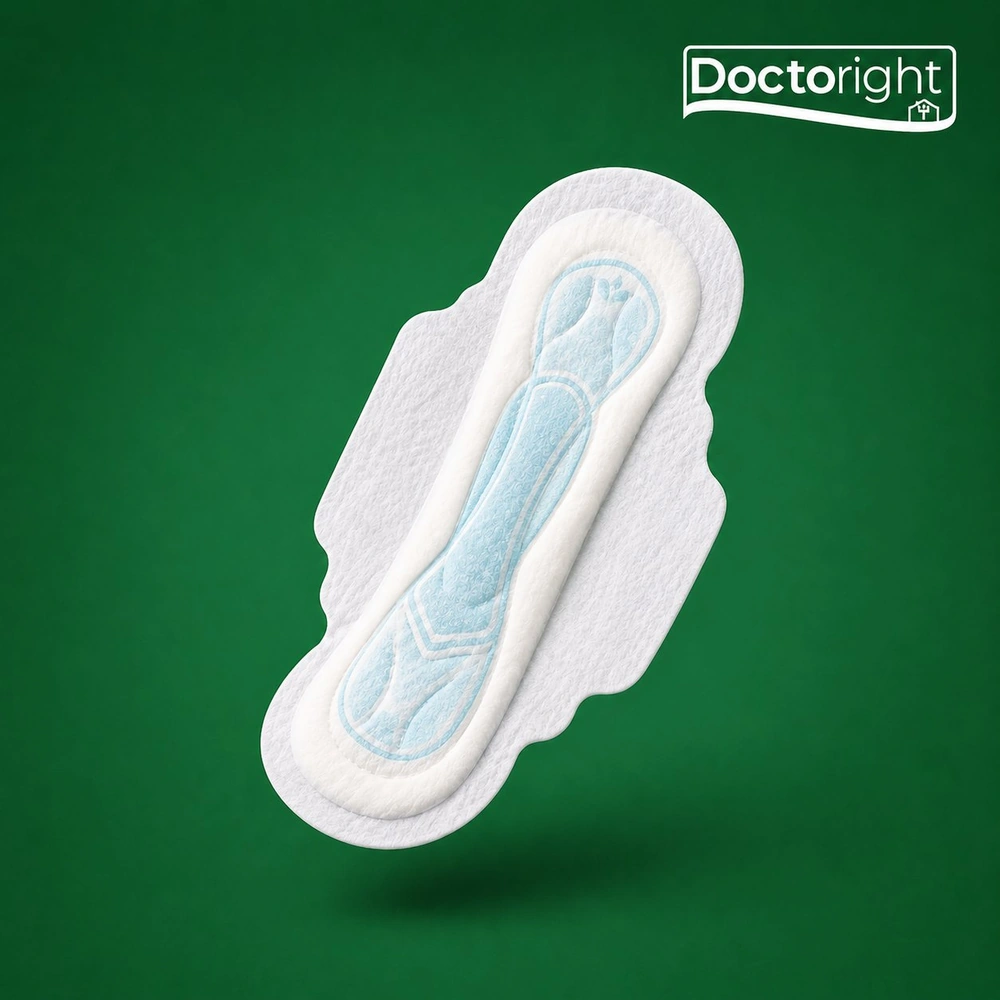
A pad is defined commercially by three things: its absorbency class, its top-sheet material, and its core construction. These determine both the retail price point you can target and the regulatory pathway in your market.
| Specification | Available options | Why it matters to your buyer |
|---|---|---|
| Format | Regular, Ultra-thin, XL/Overnight, Maternity, Winged & Non-winged | Determines shelf segmentation and price tiers |
| Top-sheet | Soft non-woven (dry-feel) or cotton-touch | Cotton-touch supports premium and sensitive-skin positioning |
| Core | Fluff pulp, fluff pulp + SAP (gel), or full-SAP ultra-thin | Higher SAP content allows thinner pads at equal absorbency |
| Length range | Approx. 180–420 mm across the range | One brand can cover day, night and postpartum needs |
| HS heading | 9619.00 (sanitary towels and similar articles) | Used on the invoice and certificate of origin worldwide |
Sanitary napkins fall under the internationally harmonised heading 9619.00. Destination-specific sub-headings vary, so the duty you pay depends less on the product than on your trade route. Three patterns are worth knowing before you order:
We confirm the heading on every commercial invoice and certificate of origin, and can advise on the documents your route requires.
The decisive advantage for a mid-market buyer building an own brand is the low entry quantity. A workable private label run starts at roughly 10,000 units per variant — enough to validate a market without committing to the very large runs other origins demand. Multi-language packaging is handled as standard, and dieline templates are provided so artwork is right the first time. Trial samples of 50–200 units are available by courier before any production order.
Around 10,000 units per variant for a production run, with small courier samples available first. Mixed-variant loads can be combined to reach an efficient container.
Yes. Custom brand name, logo, packaging design and multi-language text are all supported, with no extra tooling cost for additional languages.
The recognised conformity mark for regulated markets, ISO 9001 quality certification, and Good Manufacturing Practice where tender or agency procurement requires it. Certificate copies are available for review before you order.
Independent absorbency, rewet and pH test reports are provided with pre-production samples, which is what institutional buyers request before approval.
Villa No. 3, Symphony Cooperative Housing Society Ltd, Fatona, Seraulim, Colva, Goa 403708