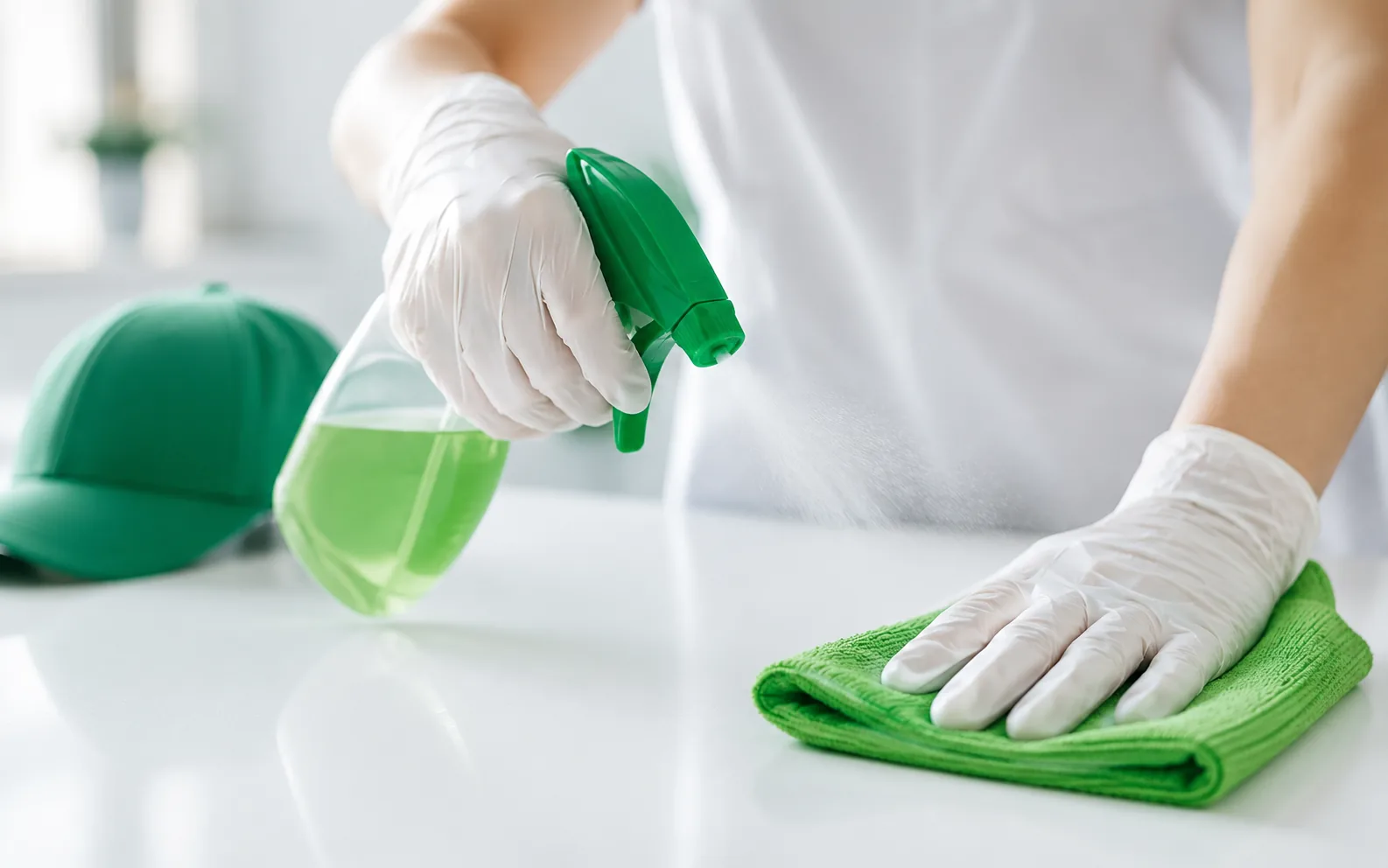
Surface disinfectants are the core of any sanitation range — high-touch, high-repeat products for retail, office, hospitality and facility-care buyers. But unlike ordinary cleaners, they are biocidal products, where the label claim, the active system and the supporting test data matter as much as the formulation. This page is your sourcing reference for formats, efficacy standards and the claim control that keeps a disinfectant shipment compliant.
We supply ready-to-use sprays, refill liquids, concentrates and institutional packs, with the active-system, efficacy and SDS/GHS documentation a biocidal product requires. Available in bulk and under private label, built around responsible, supportable claims.
| Specification | Available options | Why it matters |
|---|---|---|
| Format | RTU trigger spray, refill liquid, concentrate, institutional pack | Format drives channel and freight cost |
| Active system | Quaternary ammonium (QAC), hydrogen peroxide, alcohol, hypochlorite | The active defines the efficacy and surface fit |
| Efficacy framing | Bactericidal (EN 1276), virucidal (EN 14476), fungicidal (EN 1650) | The European efficacy benchmarks |
| Fills | 500 ml spray, 5 L refill, 20 L / 200 L bulk | Bulk and concentrate suit facilities |
| Documentation | SDS/GHS, active-ingredient and efficacy data | Mandatory for a biocidal product |
This is the single most important decision in sourcing a disinfectant, and the one that most often delays a shipment. The terms are not interchangeable. Cleaning removes visible dirt and residue. Sanitizing reduces microorganisms under defined conditions. Disinfecting requires a defined surface, a stated contact time and active-ingredient support, and a bactericidal or virucidal claim requires test reports against named organisms. A strong claim printed without matching evidence creates problems at import, retail listing and institutional tender. We help define a supportable claim before artwork, matched to the formulation, the test data and the destination market's rules.
A disinfectant's claim is only valid at its tested contact (dwell) time — the period the surface must stay wet for the active to work. European efficacy is benchmarked by recognised standards: EN 1276 (bactericidal), EN 14476 (virucidal), and EN 1650 (fungicidal), each expressed as a log reduction achieved within a stated time. A credible surface disinfectant states its active system, its contact time and the standard its efficacy is tested to — documentation we provide so your label and tender claims hold up.
The active system should match the surface and the use. QAC (quaternary ammonium) formulations are versatile, low-odour everyday disinfectants. Hydrogen peroxide systems offer strong, residue-light efficacy. Alcohol-based products act fast and evaporate cleanly but are flammable (a dangerous-goods consideration in freight). Hypochlorite (bleach-based) delivers powerful, economical disinfection where material compatibility allows. We help select the active that fits your surfaces, claims and logistics.
As with all liquid sanitation, concentrate and bulk-for-local-fill formats sharply reduce freight per litre of active product — the efficient route for distant markets. Own-brand bottle, trigger and carton artwork is supported, with SDS/GHS and supportable claim wording built in.
Sanitizing reduces microorganisms under defined conditions; disinfecting requires a defined surface, a stated contact time and active-ingredient support. The claim must match the test data.
Through recognised efficacy standards — EN 1276 (bactericidal), EN 14476 (virucidal), EN 1650 (fungicidal) — expressed as a log reduction at a stated contact time.
Yes — concentrate and bulk formats cut freight per litre of active product, ideal for distant markets and facilities.
Villa No. 3, Symphony Cooperative Housing Society Ltd, Fatona, Seraulim, Colva, Goa 403708